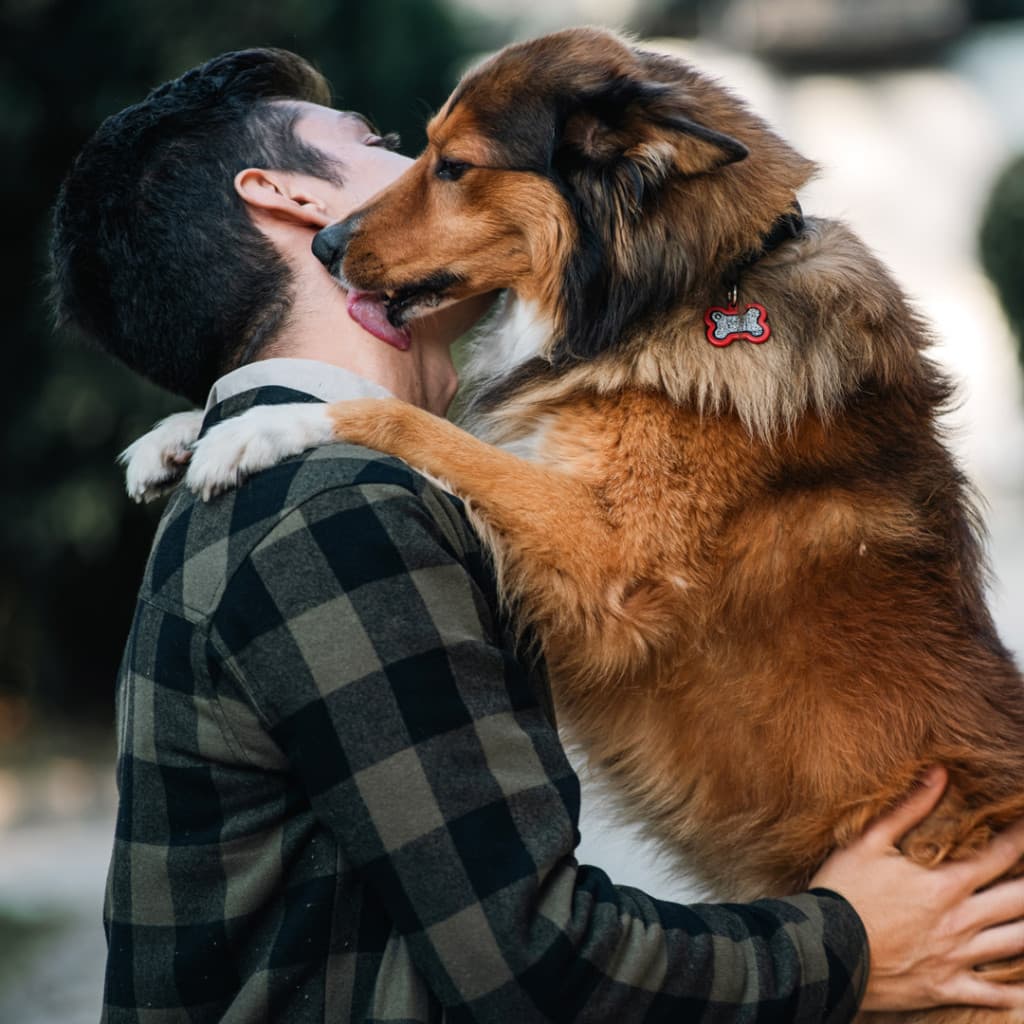
Identifying your dog in Tunisia: rules, methods and the right strategy
Microchip, tattoo, tag, vaccination record: how to identify your dog properly in Tunisia, what the regulations say, and why you should combine official ID with visible ID.
When a dog gets lost, only one question matters: how will the person who finds them know who they belong to? That's what identification is all about. In Tunisia, several tools exist side by side, each with its own role. Here's how to combine them wisely.
What the regulations say in Tunisia
Animal identification is provided for by Tunisia's livestock law (Law No. 2005-95 of 18 October 2005), and the recognised methods for dogs are tattooing and microchipping. An animal protection bill, discussed in 2026, also provides for the electronic marking of domestic animals.
In practice, though, many pet dogs in Tunisia have neither a microchip nor a tattoo. One obligation, on the other hand, is well enforced: annual rabies vaccination, free during vaccination campaigns and at veterinary services centres. Its certificate and the vaccination record are often the first documents that prove a dog is yours.
Rules change: ask your vet what applies today in your governorate, especially if you plan to travel abroad with your dog.
Identification methods, one by one
The microchip
A small capsule placed under the skin of the neck by a vet. It contains a unique 15-digit number.
- Strengths: permanent, tamper-proof, essential for travelling to the European Union.
- Limitation: it can only be read with a scanner, which only vets, shelters and official services have. Someone who finds your dog in the street can't do anything with it.
More details: dog microchips in Tunisia.
The tattoo
A number tattooed in the ear or on the inner thigh. It's visible, but it fades over time and becomes hard to read. It's done less and less. See identification tattoos: still useful?
The tag on the collar
This is the only form of ID that is visible and readable by anyone. There are two types:
- the engraved tag: a name and a number, simple, but fixed and prone to wear — pros and cons;
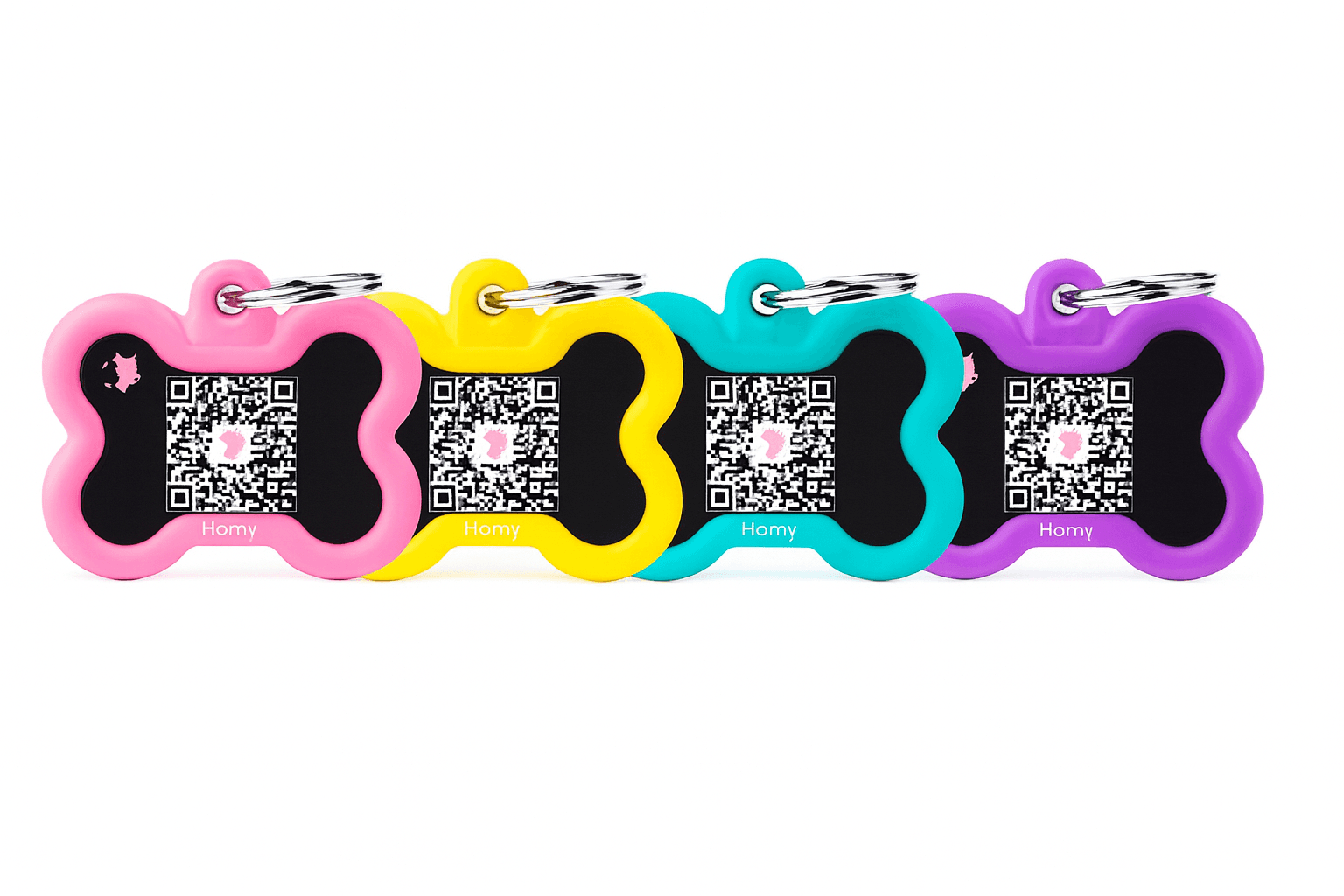
- the QR code tag: you scan it with any phone camera and the pet's profile appears, with contact details you can change at any time — how it works.
The vaccination record
It isn't identification in itself, but it links your dog to you, to their vet and to their rabies vaccination. Keep it up to date, and take a photo of it.
The right strategy: two layers
- Official ID (microchip or tattoo, plus the vaccination record): it proves the dog is yours at the vet's, in a dispute or when travelling.
- Visible ID (a tag): it lets a passer-by reach you within minutes.
Most lost dogs are found by a neighbour, a shopkeeper or a passer-by, not by a vet. That's why the visible layer is the one that saves the most time.
The most common mistakes
- A microchip that was never registered, or is linked to an old phone number.
- An engraved tag with a number that no longer exists.
- No collar at home: home is often where the dog escapes from.
- No recent photo of the dog to use in the search.
Our recommendation
A microchip (if you can, especially for travel), up-to-date rabies vaccination, and a Homy QR tag worn at all times: anyone can scan it without an app and alert you in one tap, and you can change your contact details whenever you like, with no subscription.
A tag that brings them home.
Waterproof QR tag. No app, no subscription. Whoever finds your pet scans it and alerts you in one tap.
See plans