Dog identification tattoos: are they still useful today?
For a long time, tattooing was the standard way to identify dogs. How it works, why it fades, how it compares with the microchip and the tag, and what to do if your dog is tattooed.
Before microchips became widespread, tattooing was the standard way to identify a dog. You still come across it, particularly in adult or imported dogs. But is it still worth it today?
How tattooing works
A sequence of letters and numbers is tattooed, usually inside the ear or on the inner thigh, under anaesthetic or light sedation. This code is supposed to be linked to the owner's contact details.
Its advantages
- Visible without any device: no scanner needed, unlike a microchip.
- A deterrent: a tattooed dog shows that they belong to someone.
- Still recognised as a method of identification in many countries.
Its limitations
- It fades over time, especially if it was done on a puppy: the ink spreads as the skin grows.
- It's hard to read on a dog that is frightened, has a lot of fur or has dark skin.
- It means nothing to a passer-by: a code made of letters and numbers doesn't let them call you.
- For travel to the European Union, it's only accepted if it's clearly legible and was done before 3 July 2011. In other words, for a dog travelling today, a microchip is essential.
Microchip or tattoo?
If you're identifying your dog today, the microchip is the best choice: it doesn't fade and it works for travel. A tattoo can remain a visible extra, but it's no longer the reference method. More details in dog microchips in Tunisia.
Is your dog already tattooed?
- Photograph the tattoo while it's legible and note the code in your "dog file".
- Have its legibility checked every year at the vet's.
- Consider a microchip if you plan to travel or if the tattoo is fading.
What both the tattoo and the microchip lack
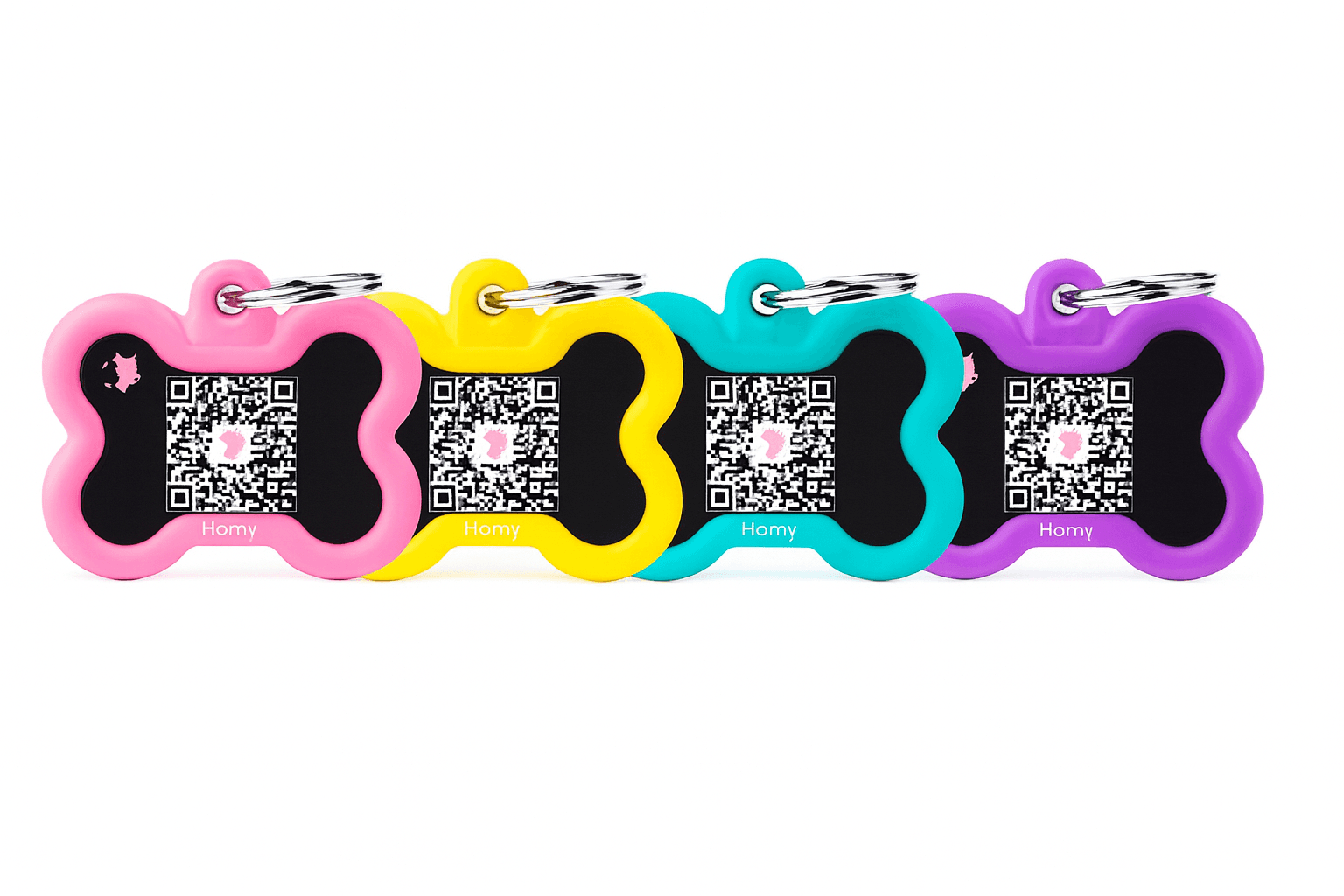
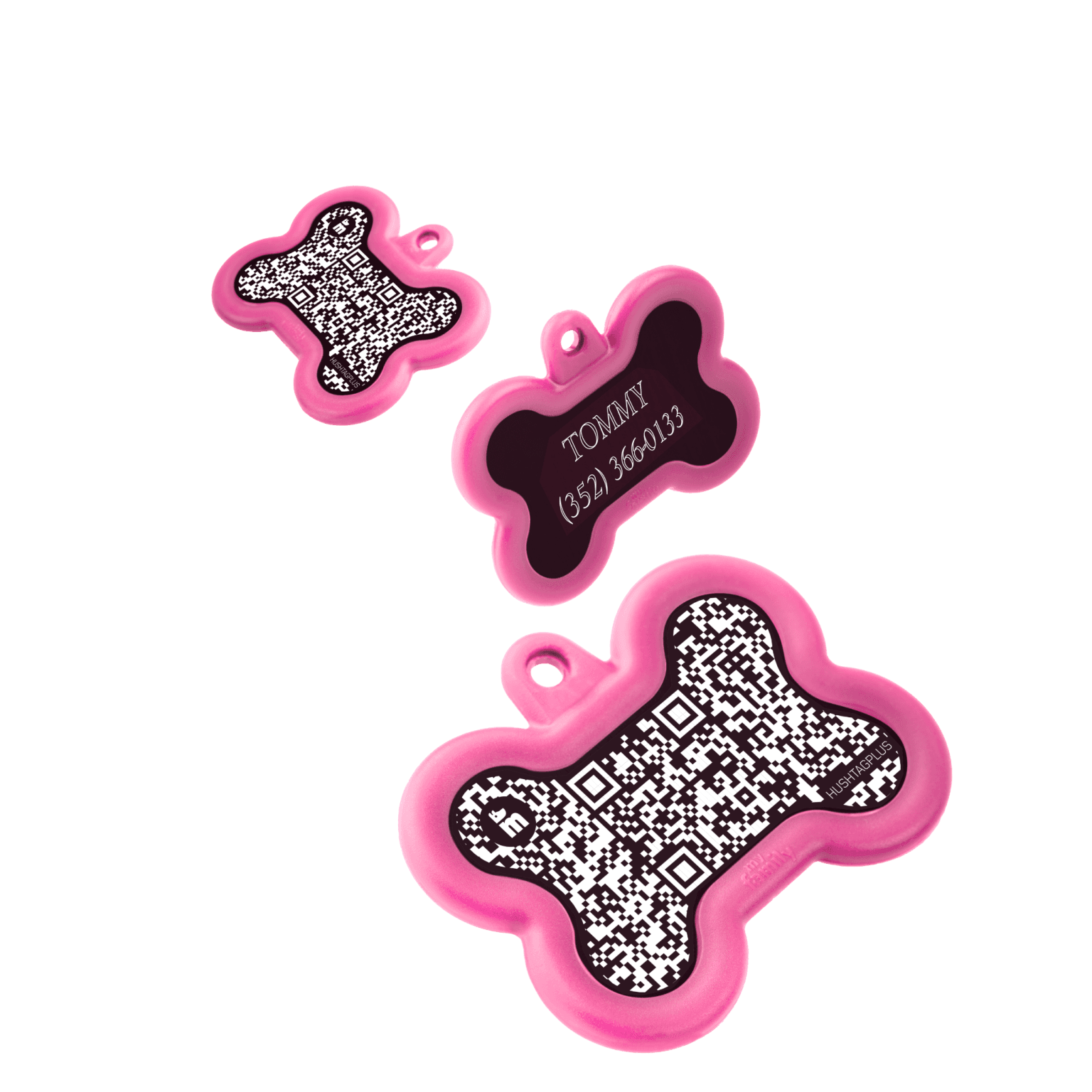
Neither lets the person who finds your dog reach you immediately. For that, you need identification that is visible and that everyone understands: a Homy QR tag shows your dog's profile with a simple scan using a phone camera, and lets the finder alert you in one tap.
Read also: microchip, tag or engraved collar: how to identify your dog properly.
A tag that brings them home.
Waterproof QR tag. No app, no subscription. Whoever finds your pet scans it and alerts you in one tap.
See plans