Dog microchips in Tunisia: how they work, what they're for and their limits
The microchip is the most reliable form of ID… for a vet. How it works, how it's fitted, why it matters for travel, and why it isn't enough for a passer-by to bring your dog back to you.
You often hear that a microchipped dog is a protected dog. That's true… up to a point. The microchip is an excellent tool, but it has a blind spot that many owners only discover on the day their dog goes missing.
What is a microchip?
A transponder the size of a grain of rice, placed under the skin, usually on the left side of the neck, with a needle slightly bigger than a vaccine needle. It contains no battery and no GPS: just a unique 15-digit number, which is read by passing a scanner over the animal.
Fitting it is quick, done by a vet, with no anaesthetic. It lasts for the dog's whole life.
What is it actually for?
- Proving the dog is yours in case of theft or a dispute, thanks to a unique number linked to your contact details and their health record.
- Travelling abroad. To enter the European Union, a dog must be identified with a microchip implanted before their rabies vaccination. Because Tunisia is not on the list of countries considered "favourable" with regard to rabies, a rabies antibody titration test is also required, at least 30 days after vaccination and at least 3 months before entering Europe. Plan several months ahead with your vet.
- Being identified by a vet or a shelter if your dog is brought to them.
Its big limitation: you need a scanner
The passer-by who finds your dog on the street corner can't read a microchip. They see a dog with a collar, and that's it. For the microchip to be any use, you need:
- that person to think of taking the dog to a vet;
- the clinic to be open and to have a scanner;
- the microchip number to be linked to your up-to-date contact details.
That's a lot of conditions. In reality, most reunions happen through a direct call between the finder and the owner.
Good habits if your dog is microchipped
- Keep the microchip number: it's on the document the vet gave you and often in the health record. Take a photo of it. See where to find your dog's ID number.
- Ask your vet to check the microchip at the annual check-up: a chip can sometimes migrate or become unreadable.
- Update your contact details everywhere the number is registered as soon as you change your phone number or address.
Microchip and tag: complementary
| Microchip | Homy QR tag | |
|---|---|---|
| Who can read it? | A vet or shelter with a scanner | Anyone with a phone |
| Visible? | No | Yes, on the collar |
| Direct contact with you? | No | Yes, alert in one tap |
| Contact details editable? | Depends on the registration | Yes, at any time |
| Official proof / travel? | Yes | No |
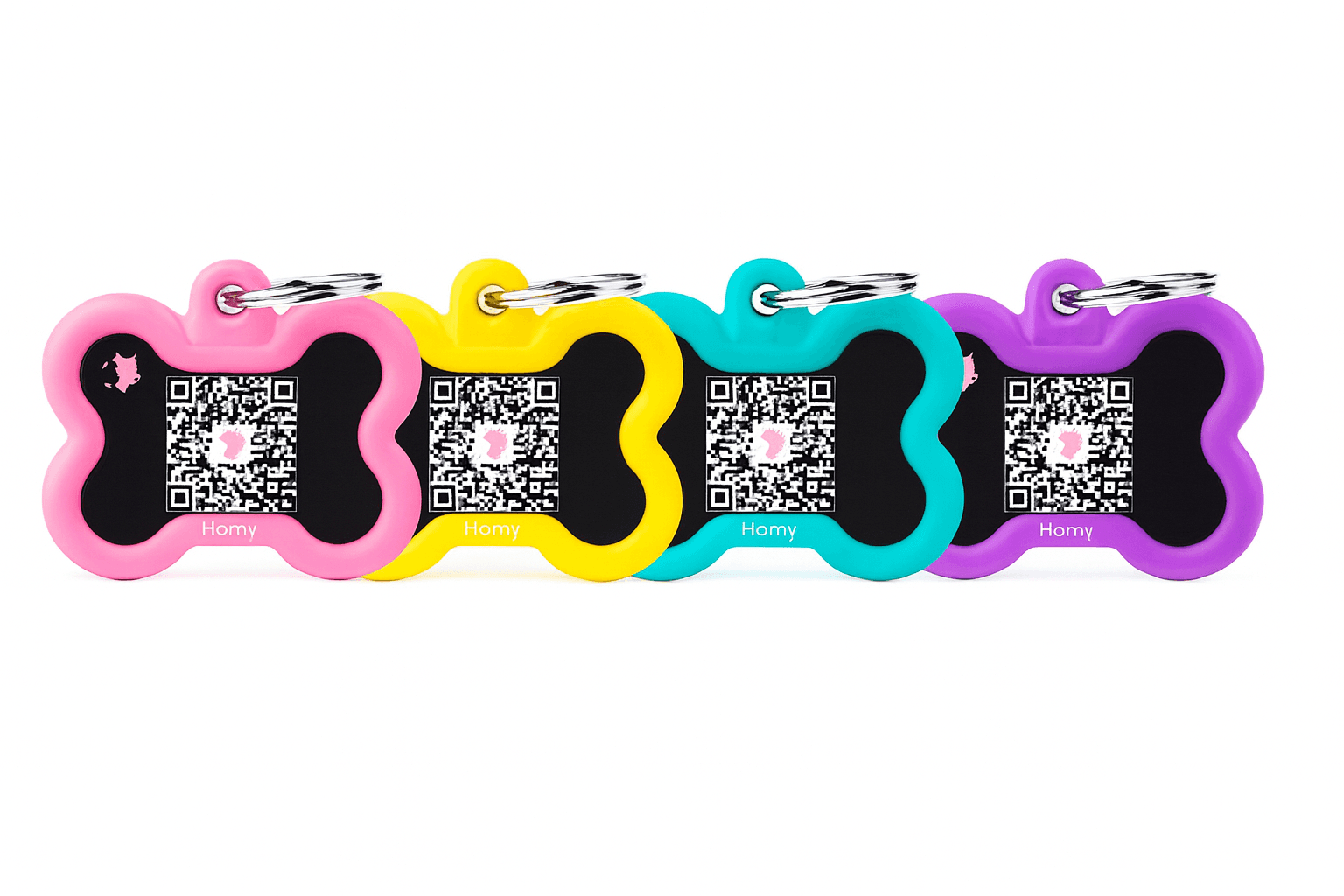
The microchip proves ownership; the tag brings your dog home. For a truly protected dog, you need both: a Homy QR tag on the collar so anyone can alert you, and a microchip for official identification.
For the bigger picture, read identifying your dog in Tunisia: the right strategy.
A tag that brings them home.
Waterproof QR tag. No app, no subscription. Whoever finds your pet scans it and alerts you in one tap.
See plans