Why does my dog run away? The real causes and the solutions that work
Boredom, hormones, fear of firecrackers, hunting instinct: understanding why your dog escapes is the only way to stop it. Causes, signs and solutions suited to life in Tunisia.

A dog that runs away isn't "being naughty": they're responding to a need or an emotion. As long as the cause is still there, they'll do it again, even with a higher wall. Here are the most common reasons, how to recognise them, and what actually works.
1. Boredom and not enough exercise
The sign: they mostly escape when left alone, and they dig, chew and bark a lot.
This is the number one cause, especially for dogs that spend the day in a garden or on a terrace. A young dog or an active breed (Malinois, German Shepherd, husky, beagle) needs far more than a walk around the block.
What works:
- two proper outings a day, one of them long, at the cooler times of day in summer (early morning, after sunset)
- sniffing games: hiding kibble in the garden, a snuffle mat, a stuffable toy
- a few minutes of training a day, which tires a dog out as much as a run
2. Hormones
The sign: a male who disappears from time to time and comes back tired or injured; a female who escapes while she's in heat.
An intact male can smell a female in heat from very far away and get over impressive obstacles. In neighbourhoods where stray dogs live, the risk of fights and bites is real.
What works: talk to your vet about spaying or neutering. While a female is in heat, walks on the leash only and no time alone in the garden.
3. Fear
The sign: they bolt suddenly at a loud noise and can go a very long way.
In Tunisia, the triggers are well known: firecrackers and fireworks at summer weddings, sports celebrations, New Year's Eve, and autumn thunderstorms. A panicked dog stops thinking: they jump, squeeze through gaps, cross roads.
What works: a safe space indoors on high-risk evenings, closed windows, and gradual desensitisation to noises. Our detailed guides: dogs and firecrackers and dogs and thunderstorms.
4. Hunting instinct
The sign: they take off after a cat, a bird or another dog, and then can't hear you any more.
Hunting dogs and Nordic breeds follow a trail without looking back. The many free-roaming cats and dogs in Tunisian neighbourhoods are all potential triggers.
What works: solid recall training (our method), a 10 m long line in open spaces, and never off the leash near roads.
5. A new or stressful environment
The sign: escapes right after moving house, a new baby, building work, or a stay with a sitter.
The dog is looking for their old territory or fleeing an atmosphere that stresses them. The first weeks in a new home are the riskiest — see moving house with your dog.
6. Separation anxiety
The sign: they escape shortly after you leave, destroy doors, howl.
This dog isn't looking for adventure: they're looking for you. The solutions involve gradual departures, something to keep them busy as you leave, and sometimes help from a trainer or a veterinary behaviourist.
Safety measures for every dog
- A fence with no weak spots: raise low walls, block the gap under the gate, check the railings on terraces.
- A self-closing gate and clear instructions for the family, delivery drivers and workers.
- Never alone on the roof or balcony without protection.
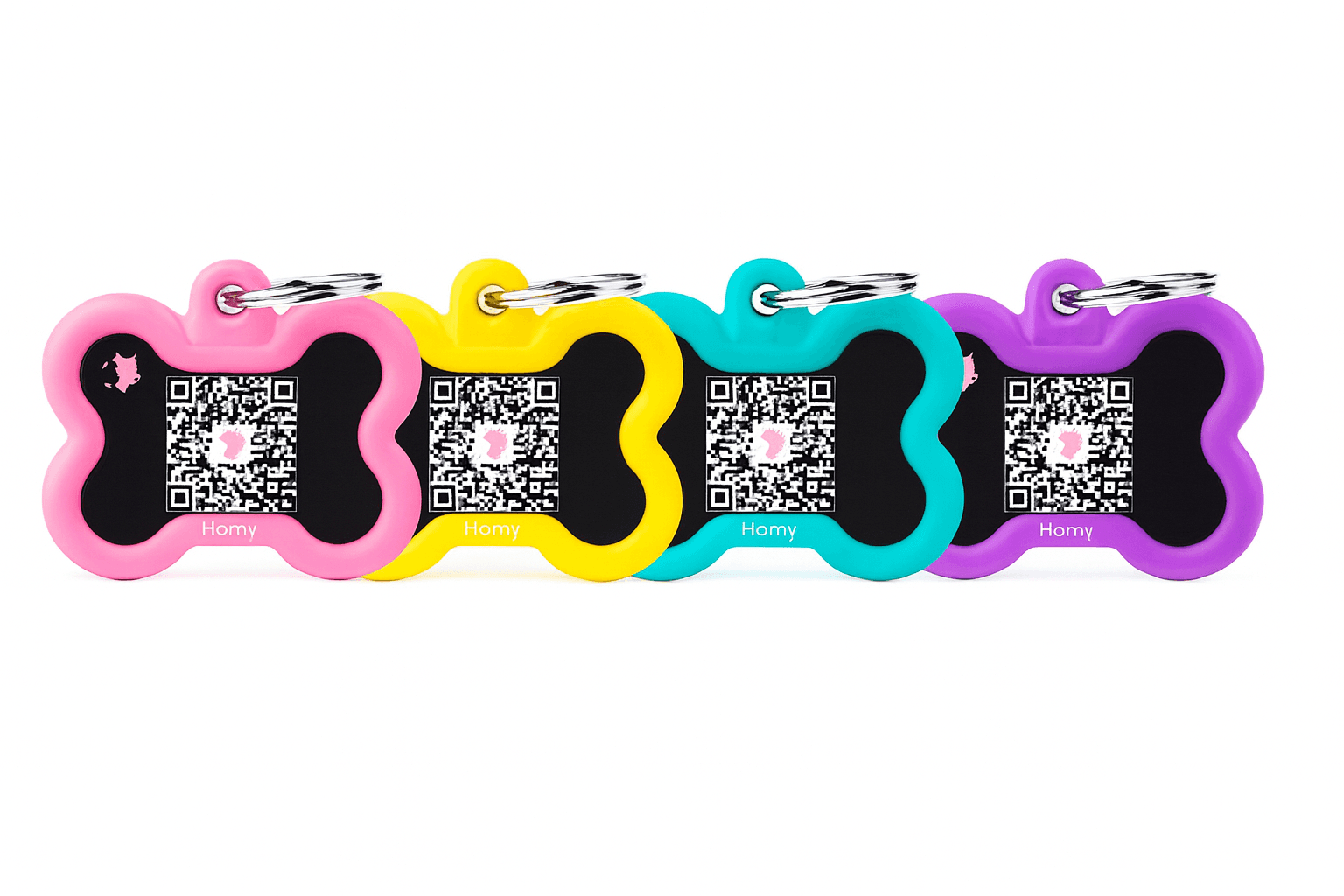
- Visible identification: even the best-supervised dog can escape one day. A Homy QR tag lets whoever finds them alert you straight away, no app needed.
When to ask for help
If the escapes continue despite more exercise and a secure fence, see your vet: pain, a hormonal problem or significant anxiety may be behind it, and all of these can be treated.
And if your dog has just escaped, don't waste time: follow what to do in the first few minutes.
A tag that brings them home.
Waterproof QR tag. No app, no subscription. Whoever finds your pet scans it and alerts you in one tap.
See plans