Teaching your dog recall: a step-by-step method
A dog who comes back when called is the best protection against running away. Here's a simple, positive method to teach your dog recall, from the living room to the beach.
A good recall is the command that can save your dog's life: near a road, faced with a pack of stray dogs or a cat darting away. It's also the best way to stop them running off. The good news: every dog can learn it, as long as you take it step by step.
The three golden rules
- Coming back must always be worth it. Every return earns a reward: a high-value treat (chicken, cheese), a game, a good fuss.
- Never call them for something unpleasant: a bath, the end of a walk, a telling-off, medication. In those cases, go and fetch your dog yourself.
- Never scold a dog who comes back, even if it took them ten minutes. Otherwise, they learn that coming back is risky.
Choosing your recall word
Pick a word that is short, distinctive and used only for recall: "Here!", "Come!" or a whistle. If you've already overused "Come" with no result, change the word and start again from scratch. The whole family must use the same word.
The method, step by step
Step 1: at home
In a quiet room, say the recall word when your dog is one or two metres away and already looking at you. They come: reward them immediately, with enthusiasm. Repeat 5 to 10 times per session, several times a day, for a few days.
Step 2: adding a little distance
Call them from another room, then when they're busy (sniffing, playing). The two-person "ping-pong" game, where you take turns calling them, is very effective and fun.
Step 3: outdoors, with a long line
Outside, distractions are much stronger. Use a 5 to 10 metre long line attached to a harness (never to the collar). It gives your dog freedom while keeping you in control: if they don't come back, you can stop them leaving without yanking them.
Start somewhere calm (a fenced field, a park early in the morning), then gradually increase the distractions.
Step 4: real distractions
Other dogs, cats, children running, beach smells… Work at a good distance at first, and reward very generously. A successful recall with a cat nearby is worth a jackpot of treats.
Step 5: letting them off, only when it's solid
Only let your dog off when they come back almost every time on the long line, in a variety of situations, and only in safe places, away from roads. Even then, keep the long line within reach for several weeks.
The most common mistakes
- Repeating the word over and over: "Here, here, here!" teaches the dog that the first call doesn't count.
- Chasing after them: they think it's a game. Instead, run in the opposite direction while calling them cheerfully.
- Only calling them when it's time to leave: call them during the walk, reward them, then let them go again. Recall shouldn't mean "the party's over".
- Going too fast: each step must be solid before you move on to the next.
What about dogs with a strong hunting instinct?
Some breeds (sighthounds, northern breeds, hunting dogs) have such a strong instinct that a perfect recall is very hard to achieve. For them, the long line remains your best ally. If you have a dog like this, also read the dog breeds most likely to run away.
The safety net: identification
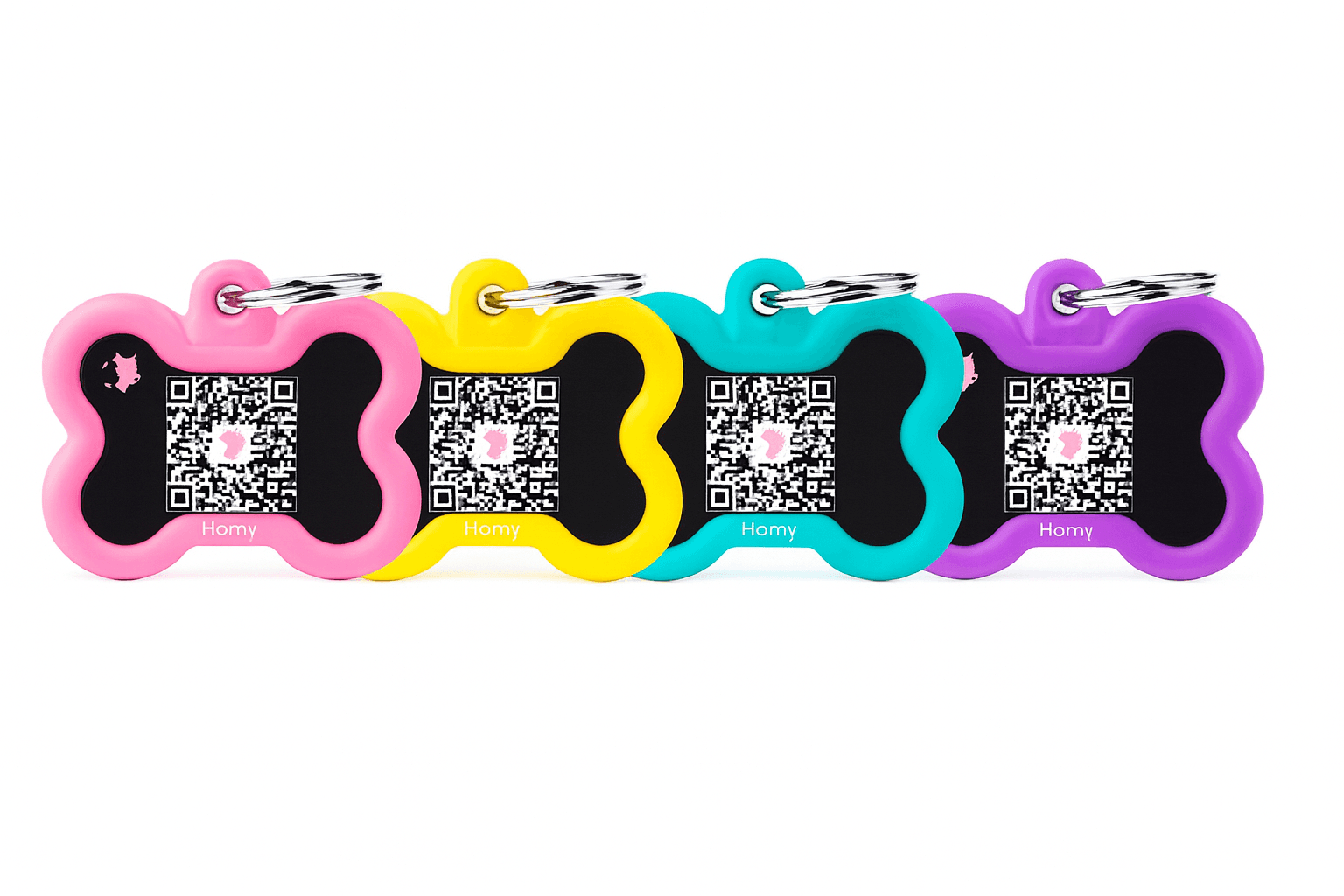
Even the best-trained dog can panic one day. If recall fails, it's their identification that brings them home. With a Homy QR tag, whoever finds them sees their profile and can alert you in an instant.
Key takeaway: a solid recall is built in calm conditions, with generous rewards, a long line and plenty of patience. And up-to-date identification remains essential for the day it isn't enough.
A tag that brings them home.
Waterproof QR tag. No app, no subscription. Whoever finds your pet scans it and alerts you in one tap.
See plans