Stray dogs in Tunisia: what to do and who to call
A stray dog outside your home, injured, threatening, or maybe lost? How to react safely, who to contact (municipality, vet, animal welfare groups) and what to do if you are bitten.
Stray dogs are part of the landscape in many Tunisian towns and cities. Most of them are fearful and avoid people. But a dog alone in the street can also be a lost family dog, an injured animal or, more rarely, an aggressive dog. Here's how to react in each case without putting yourself in danger.
Your safety first
- Don't run, and don't stare the dog in the eye. Stay calm, stand side-on, and move away slowly.
- Don't reach out towards a dog you don't know, especially if they're eating, have puppies with them or are growling.
- Don't approach a pack. Cross to the other pavement or take a detour.
- Protect children: teach them never to touch a dog they don't know, and to stand still "like a tree" if a dog comes up to them.
Lost or stray? The clues
A lost family dog often has:
- a collar or harness, sometimes a tag
- a well-kept coat and a normal weight
- disoriented behaviour: they watch cars and passers-by and seem to be looking for someone
- a response to simple commands ("sit", or their name if it's on the tag)
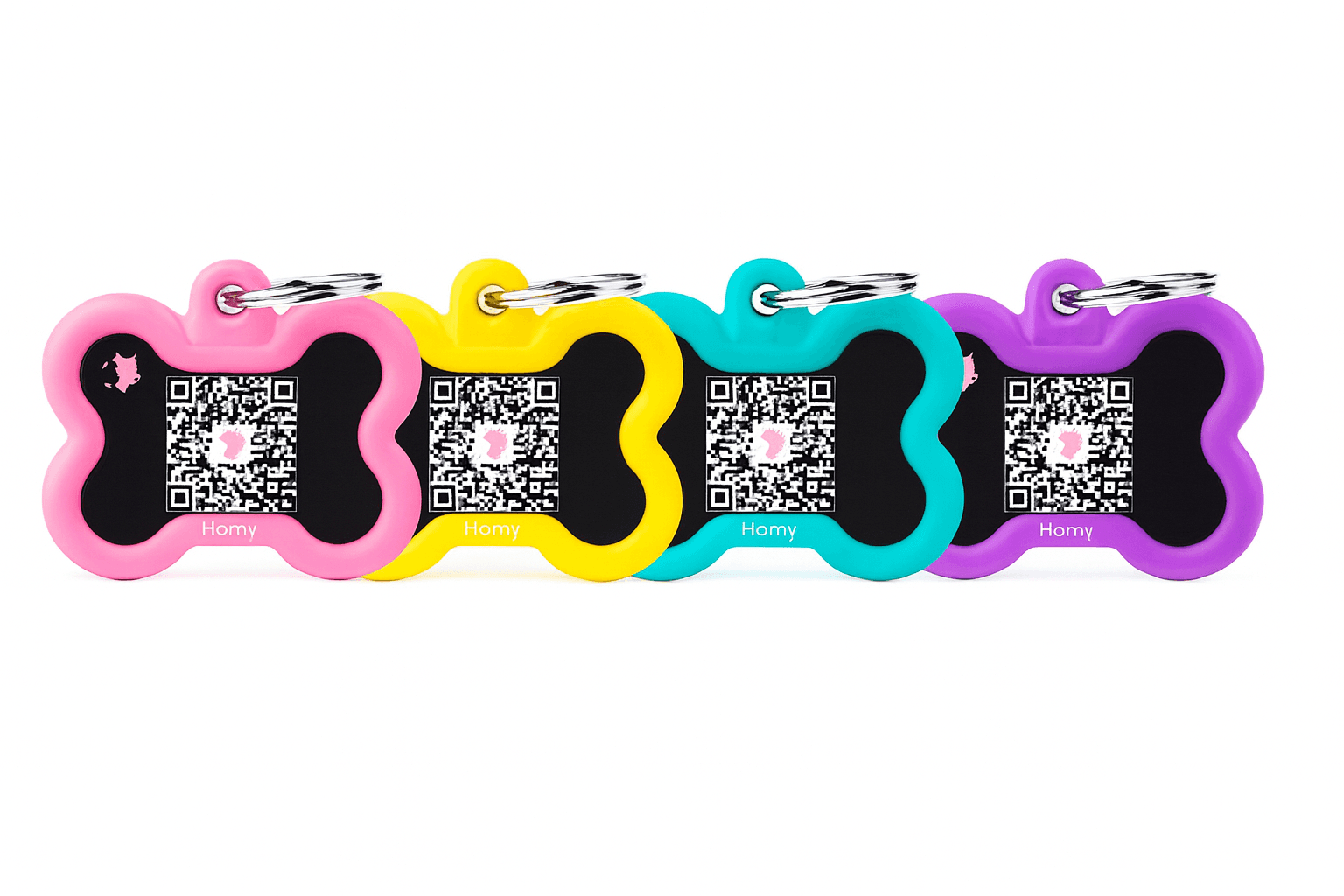
If they wear a tag with a QR code, like a Homy tag, simply scan it with your phone camera: their profile appears and you can alert their owner in one tap. Our full guide: I found a dog: what should I do?
Who to call, and in what order
1. In case of immediate danger
An aggressive dog threatening people, or an accident on the road: call the police (197) or civil protection (198).
2. For a stray dog that is causing problems
Contact your municipality, usually through its hygiene department (service d'hygiène). It's responsible for stray animals in its area. Several municipalities (for example in Ariana, La Marsa and La Goulette) have set up capture, sterilisation, vaccination and release programmes, often in partnership with animal welfare associations. Ask whether yours runs this type of programme.
3. For an injured or sick dog
- Call a nearby vet clinic: they can advise you and sometimes take the dog in.
- Contact the animal welfare associations in your area, which are very active on social media: they know the foster families and partner vets.
4. For a dog that seems lost
Take a photo from a distance and post it in your city's lost pet Facebook groups, with the exact location and time. If you can get the dog somewhere safe without any risk, a vet can check whether they have a microchip.
If you're bitten or scratched: take no chances
Rabies is present in Tunisia and is fatal once symptoms appear. After a bite, a scratch or a lick on a wound, even a minor one, and even if the dog looks healthy:
- Wash the wound immediately with soap and plenty of water, for several minutes.
- Go without delay to a rabies treatment centre: there are hundreds across the country, attached to public health facilities, as well as the Institut Pasteur de Tunis. Post-exposure treatment is free.
- If the dog has an owner, the dog must be placed under veterinary observation for the observation period (15 days). The dog must not be put down: this observation is what shows whether there is a risk.
Never rely on "he seemed friendly": only a health professional can assess the risk.
Protecting your own dog
- Annual rabies vaccination: it's compulsory and free in Tunisia, during national and local campaigns and at the permanent centres run by the veterinary services. Ask your vet or your governorate's veterinary services.
- Keep them on a leash in areas where packs live, and avoid the times when packs are active (very early in the morning, late in the evening).
- An ID tag: if your dog escapes and ends up among stray dogs, it's what lets passers-by understand that they have a family — and alert you.
Key takeaway: safety first, the municipality for strays, a vet or an animal welfare association for an injured dog, and if you're bitten, wash with soap and water, then go to a rabies treatment centre without delay.
A tag that brings them home.
Waterproof QR tag. No app, no subscription. Whoever finds your pet scans it and alerts you in one tap.
See plans