How to identify your cat: microchip, tag, tattoo — the complete guide
How to identify your cat in Tunisia: microchip, tattoo, QR tag, safety collar. What each method offers, where to find your cat's ID number, and the ideal combination.

"My cat never goes out, there's no need to identify them." That's often what owners think… until the day a window is left open. Indoor cats are precisely the ones that get lost most easily, because they don't know the outside world. Here's how to identify your cat properly.
The three methods
The microchip
A small transponder placed under the skin by the vet, carrying a unique 15-digit number.
- Pros: permanent, essential for travelling abroad.
- Cons: unreadable without a scanner; a neighbour who finds your cat can't do anything with it.
More details: cat microchip in Tunisia.
The tattoo
A code tattooed inside the ear. Visible, but it fades over time and is hard to read on a cat that's struggling. Less and less common.
A tag on a collar
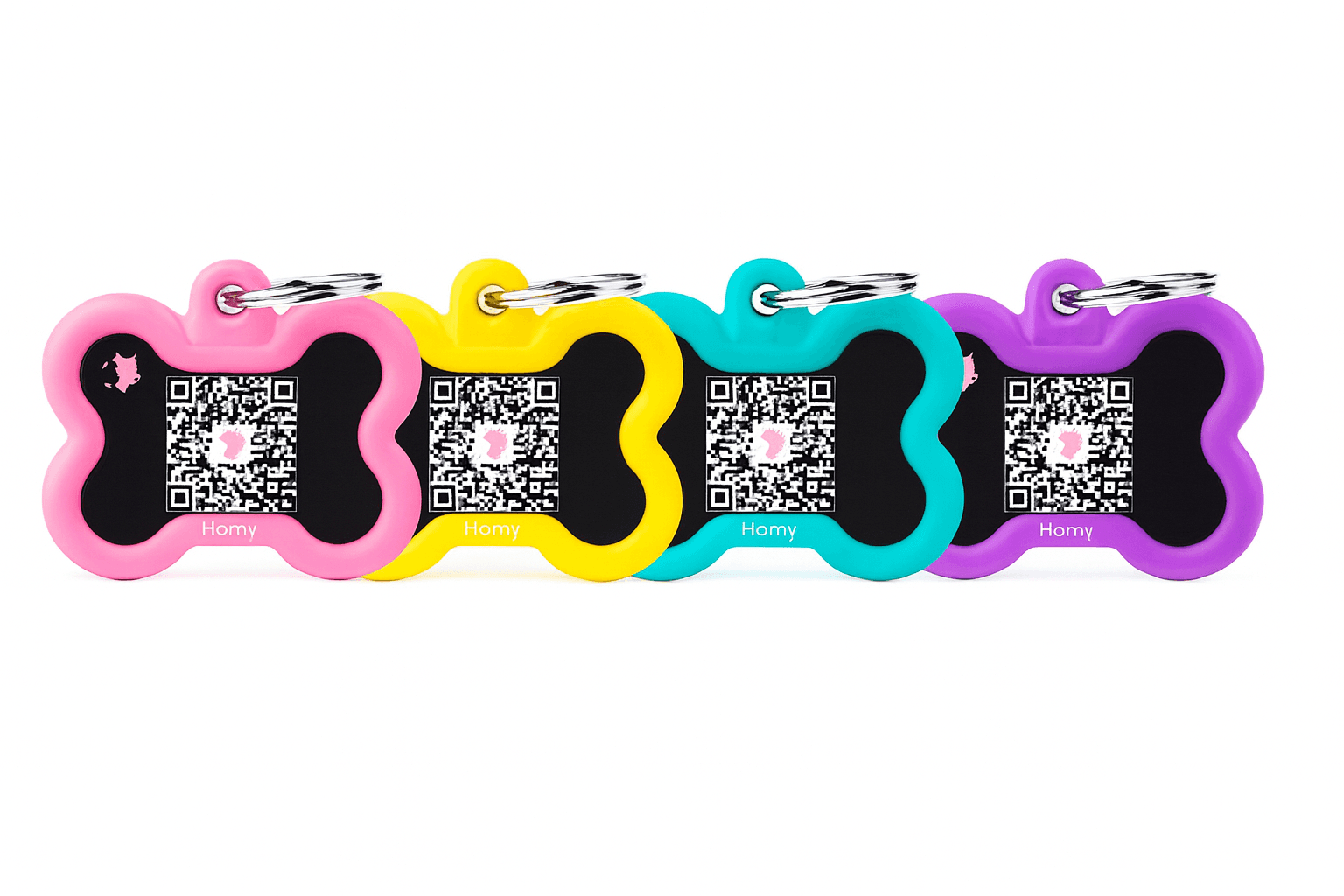
The only identification that is visible and understandable to everyone. A Homy QR tag lets anyone who scans it see your cat's profile and alert you, with no app.
The collar: safety first
A cat climbs, jumps and squeezes through gaps: a standard collar can get caught on a branch or a railing. Use only a breakaway collar (a safety buckle that opens under tension) or an elastic one, properly fitted: you should be able to slide two fingers underneath.
Get your cat used to it gradually: a few minutes at first, with a treat, then longer. Most cats forget about it within a few days. Choose a light, quiet tag.
Where can you find your cat's ID number?
- Microchip number: on the document the vet gave you when it was implanted, in the health record, or in your vet's file — your vet can also scan the chip again.
- Tattoo: inside the ear; write it down while it's still legible.
- Vaccination booklet: it certifies rabies vaccination, which is mandatory and free in Tunisia, and links your cat to their vet.
Take photos of all of this and keep them in a folder on your phone, along with recent photos of your cat.
The ideal combination
- A microchip (especially if you travel), and up-to-date rabies vaccination.
- A QR tag on a safety collar, so a neighbour can alert you straight away.
- Recent photos from several angles.
Also worth reading: lost cat: what to do and GPS for cats without a subscription: the truth.
A tag that brings them home.
Waterproof QR tag. No app, no subscription. Whoever finds your pet scans it and alerts you in one tap.
See plans