GPS for cats without a subscription: the truth (and the alternative)
Can you track your cat with a GPS without a subscription? Weight, battery life, network coverage, dangerous collars: what to know before fitting your cat with one, and the safest way to make sure someone brings them home.
Your cat roams the rooftops and the neighbourhood gardens, and you'd love to know where they spend their nights? Cat trackers are tempting. Here's what they can really do — and what you need to know before putting one on your cat.
A true GPS without a subscription barely exists
Just as with dogs, a tracker that shows the position live has to send it over the mobile network, which means a SIM card and therefore a plan. Offers sold as "no subscription" are either Bluetooth trackers (which aren't GPS) or devices with a subscription included for a limited period.
The constraints specific to cats
- Weight. A cat often weighs 3 to 5 kg; a GPS unit weighing several tens of grams, worn day and night, can bother them. Aim for the lightest possible device.
- Battery life. Often one to three days. Yet a cat stuck in a garage or a cellar can stay there longer: the tracker dies just when you need it most.
- Network. Cellars, garages, car parks, car engines… a cat's favourite hiding spots are often the places where the signal is poor.
- The collar. A cat that climbs and squeezes through gaps can get caught. Only use breakaway collars (with a safety buckle that opens under tension).
What about an AirTag?
An AirTag isn't a GPS: it can only be located when an iPhone passes nearby. In Tunisia, where the vast majority of phones are Android, it often goes hours without an update. It's also fairly bulky for a cat. More details: AirTag for dogs: real range and limits.
The alternative: identification anyone can read
A lost cat is almost always found by a neighbour: in a stairwell, on a roof, under a car. What matters then is that this person can reach you.
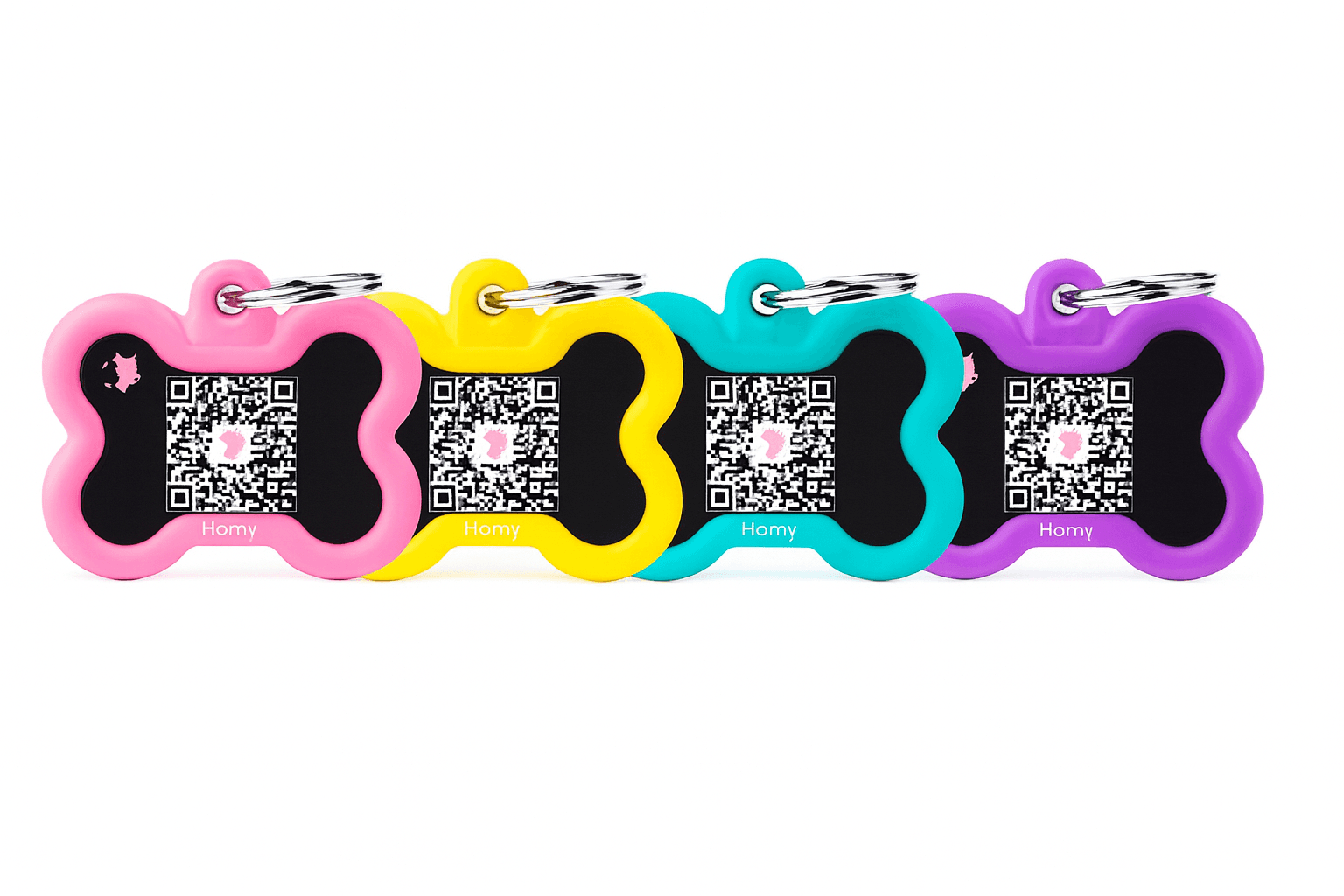
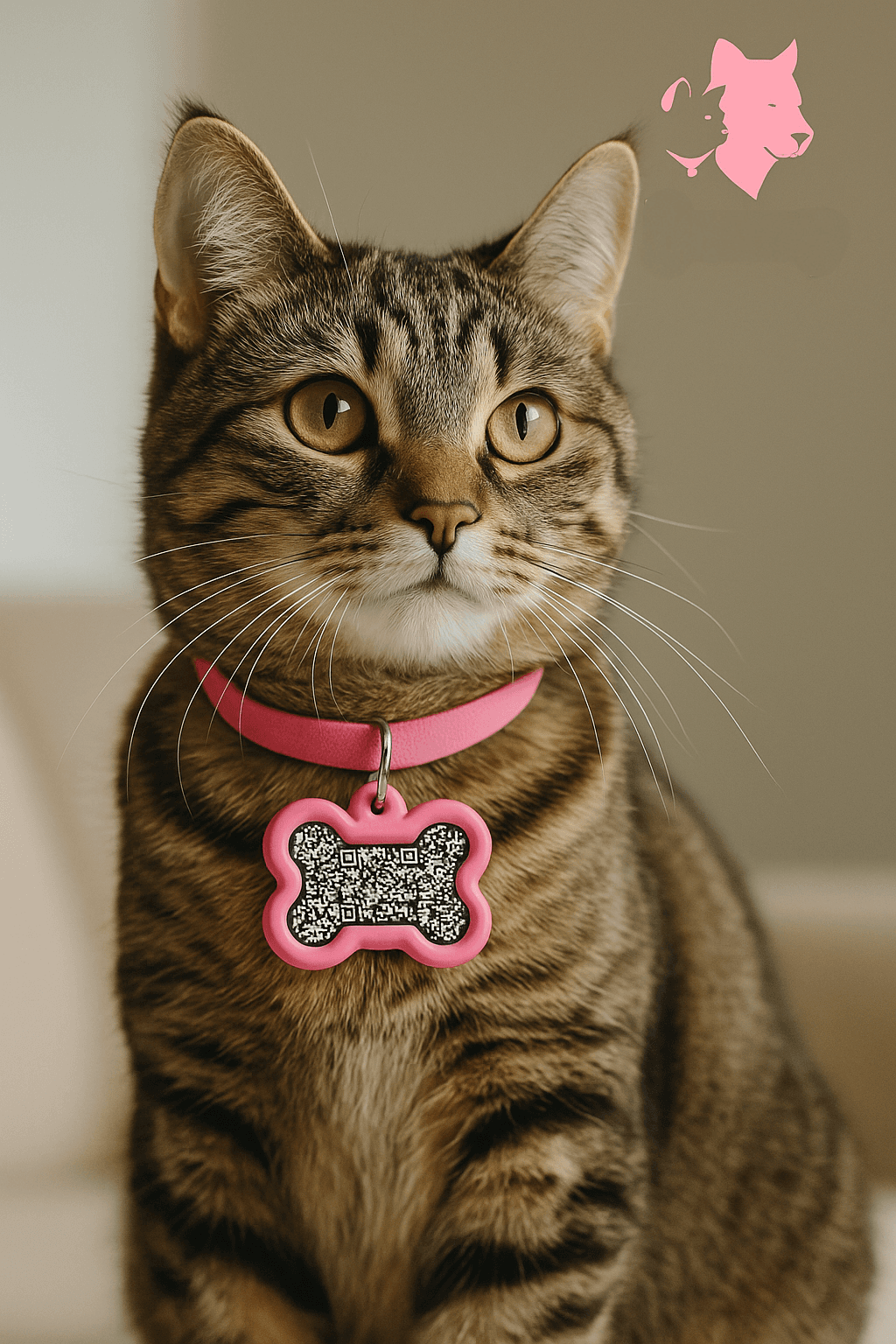
A lightweight Homy QR tag on a breakaway collar lets anyone scan the tag with their phone, see that your cat has a family, and alert you. No subscription, no battery, no app.
Further reading:
Key takeaway: a GPS for cats is possible but demanding (weight, charging, subscription). For most cats, visible identification that anyone can read is still the best way to make it back home.
A tag that brings them home.
Waterproof QR tag. No app, no subscription. Whoever finds your pet scans it and alerts you in one tap.
See plans