Lost dog in Tunisia? The exact steps to find them in the first 24 hours
A calm, complete checklist for finding a lost dog in Tunisia — what to do in the first hour, where to post, who to call, and how to dramatically improve your odds of a happy reunion.
Your dog is missing. Your heart is in your throat and you don't know where to start. Take a breath — most dogs are found within 24 to 72 hours when their humans act fast and methodically. This guide walks you through exactly what to do, in the order it matters.
The first 60 minutes are the most important
Most lost dogs don't run far. They get spooked, they bolt, and then they hide nearby. The single biggest factor in a fast reunion is how quickly you start searching the immediate area and how visible you make yourself.
Step 1 — Search a 500 m radius on foot, calling their name
Walk slowly. Call your dog's name in a calm, happy voice — the same voice you use at home. Frightened dogs often won't respond to shouting; they associate it with danger.
Check:
- Under cars and behind dumpsters
- Inside open garages, stairwells, and building entrances
- Bushes and quiet corners — dogs hide when they're scared
If you have another person, split up. One stays at the spot they were last seen — many dogs circle back.
Step 2 — Bring something that smells like home
Their bed, your worn t-shirt, an open bag of their food. Place it at the spot they disappeared from. Scent is a dog's strongest navigation tool.
Going wider: the digital search
Within the first hour you also want to flood the internet with your dog's photo.
Where to post in Tunisia
- Facebook groups: search for "Animaux perdus Tunisie", "Lost & Found Pets Tunisia", and groups specific to your governorate (e.g. "Animaux perdus Sousse").
- Instagram & TikTok: a short video with their name, your phone number, and the area gets shared faster than a static post.
- Local veterinarians: call every vet clinic within 5 km. Many keep a noticeboard of found animals.
- Municipal pound (fourrière): check yours and ask them to call if a dog matching your description is brought in.
A good post includes: a clear recent photo, the area and time they went missing, any distinguishing marks, whether they're friendly or fearful, and your phone number — bold and easy to copy.
Posters that actually work
Old-school posters still produce results, especially in residential neighborhoods. The trick is design: most posters fail because nobody reads them from across the street.
Rules for a poster that works:
- One big word at the top: "LOST" or "PERDU" in the largest font that fits.
- One large photo that fills at least a third of the page.
- Phone number in giant text — bigger than the photo caption.
- Two or three short facts, no paragraphs. "Female, 12 kg, brown collar, friendly."
- Print 30–50 copies and put them at eye level on lamp posts, café windows, and at every junction within 1 km of where they were lost.
The reunion problem most owners don't think about
Here's the part that haunts people after the fact: even when someone finds your dog, they often can't reach you.
A collar with a name and number printed on it weathers off. A microchip helps a vet, but only if the dog is taken to one — most finders just want to call you directly.
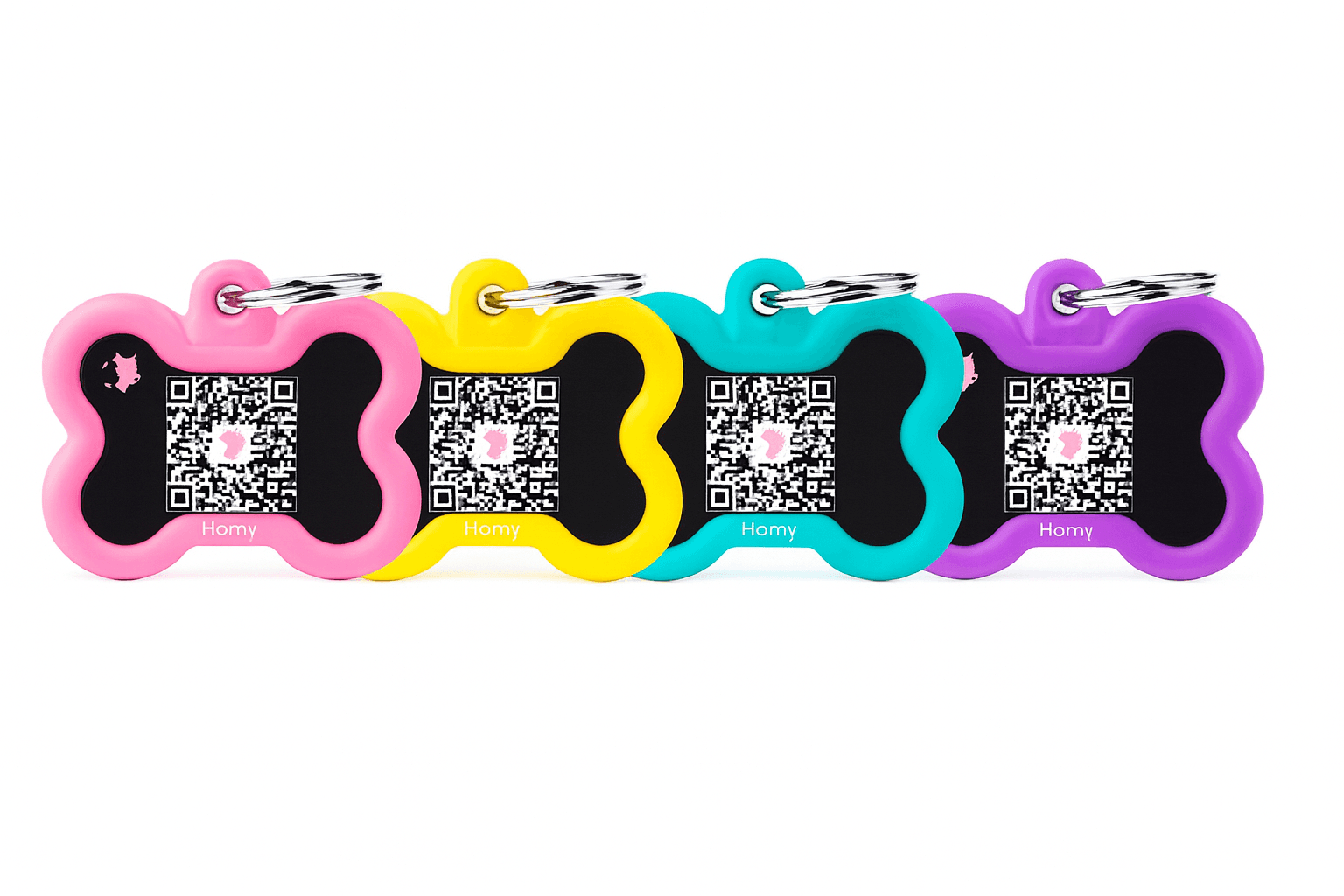
This is why we built Homy. It's a waterproof QR tag for your dog's collar. Anyone who finds your pet — a neighbor, a runner, a kid — points their phone camera at the tag, your contact info appears instantly, and your phone rings the moment they tap it. No app required for the finder, no monthly fee, your number stays updateable forever.
If you're reading this and your dog is still safe at home, the best 5-minute investment you can make is a tag. Most reunions happen because a stranger could call.
A 24-hour checklist you can screenshot
- Walk a 500 m radius calling their name, calmly
- Place a scented item where they disappeared
- Post in 3–5 Facebook groups specific to your city
- Post on Instagram and TikTok with a video
- Call every vet within 5 km
- Call your municipal fourrière
- Print 30 posters and put them up within 1 km
- Repost on social media at peak hours (8 am, 1 pm, 7 pm)
- Return to the last-seen spot at dawn — dogs move at night
- If chipped, confirm the chip database has your current number
What not to do
- Don't chase. A scared dog will run from anyone, including you. Sit down, open the treat bag, wait for them to come.
- Don't give up after one day. Most reunions happen between hours 24 and 72.
- Don't offer a huge cash reward upfront. It attracts scammers. "Reward" is enough.
When to expand the search
If 48 hours have passed:
- Widen to a 2 km radius and continue postering
- Check shelters in neighboring governorates
- Post in national Facebook groups
- Contact dog-walker and runner groups — these people cover ground daily
Most stories end well. Stay calm, stay methodical, stay visible. The combination of a fast local search and a wide digital broadcast finds the vast majority of lost dogs in Tunisia within three days.
And if you haven't yet — get a QR tag for the next time they slip out. Because next time, the call comes in before you even know they're gone.
A tag that brings them home.
Waterproof QR tag. No app, no subscription. Your phone rings the moment someone scans.
See plans