QR vs NFC vs microchip: which pet ID actually brings your pet home?
An honest comparison of the three modern ways to identify a lost pet — QR tags, NFC tags, and microchips. What each one does, what they don't, and which combination is genuinely worth your money.
You've decided to invest in proper ID for your pet. Good — it's the single highest-leverage thing you can do to bring them home if they ever wander off. But which technology actually works? Here's the unvarnished comparison.
The three options in one paragraph
A microchip is a rice-sized implant placed under your pet's skin by a vet; it stores an ID number that a vet can read with a scanner. A NFC tag is a chip in a collar charm that activates when a finder taps their phone against it. A QR tag is a printed code on a collar charm that anyone with a smartphone camera can scan. They sound similar. They behave very differently.
Microchip: essential, but not a recovery tool
A microchip is the legal proof of ownership in many countries, and you should absolutely chip your pet. But it's a misconception that "chipped = findable." Here's the catch:
- The finder needs to take your pet to a vet or shelter to read it.
- The vet needs to scan with the right type of scanner — there are multiple chip standards.
- The chip is only as good as the registry behind it. If you moved or changed your phone, and never updated the database, the chip points to a dead number.
A microchip is your backup if a shelter intakes your pet. It is not how a neighbor returns them to you the same afternoon.
Use it for: legal identification, shelter recovery. Don't expect: the random finder to know it exists, let alone scan it.
NFC tag: cool, but limited
NFC ("tap your phone") tags are slick. The pitch is good: finder taps phone on tag, your contact appears. In practice:
- iPhones older than the XR don't auto-launch NFC links — the finder needs to manually open a reader app.
- Android phones vary wildly. Many require NFC to be turned on in settings.
- A surprising number of people don't know what NFC is and won't realize they can tap it.
- NFC chips are small and break under impact more easily than printed codes.
NFC works beautifully — if the finder is technically curious and patient. The reality is that most finders are stressed, in a hurry, and trying to do the right thing as fast as possible.
Use it for: tech-savvy regions, secondary backup. Don't expect: universal compatibility.
QR tag: the boring option that wins
QR codes are everywhere. Restaurant menus. WiFi sharing. Vaccine certificates. Every smartphone made since 2017 reads them with the default camera, no app, no settings, no setup. Point camera, tap link, done.
For a lost-pet scenario this matters more than it sounds:
- Zero learning curve for the finder. The exact same action as scanning a restaurant menu.
- Works on every modern phone. Including the cheap Android your neighbor's grandma uses.
- Survives wear. A QR is just printed ink with redundancy built into the code — 30% of it can be scratched off and it still works.
- Live data. Unlike a phone number engraved on a collar, the link points to a profile you can update. Move? New number? Edit it in seconds.
The downside: it's only useful when the tag is on the pet. If they slip the collar, the QR is gone. (This is true of NFC tags too.) The microchip is your fallback for that case.
The combination that actually works
If you genuinely care about getting your pet back, you want two things working together:
- A microchip, kept current in the national registry — your legal and shelter backup.
- A QR tag on the collar — your everyday recovery tool, because 90% of "found" pets are returned by neighbors, not shelters.
NFC is fine as a luxury extra, but it doesn't replace either of the above.
How Homy compares
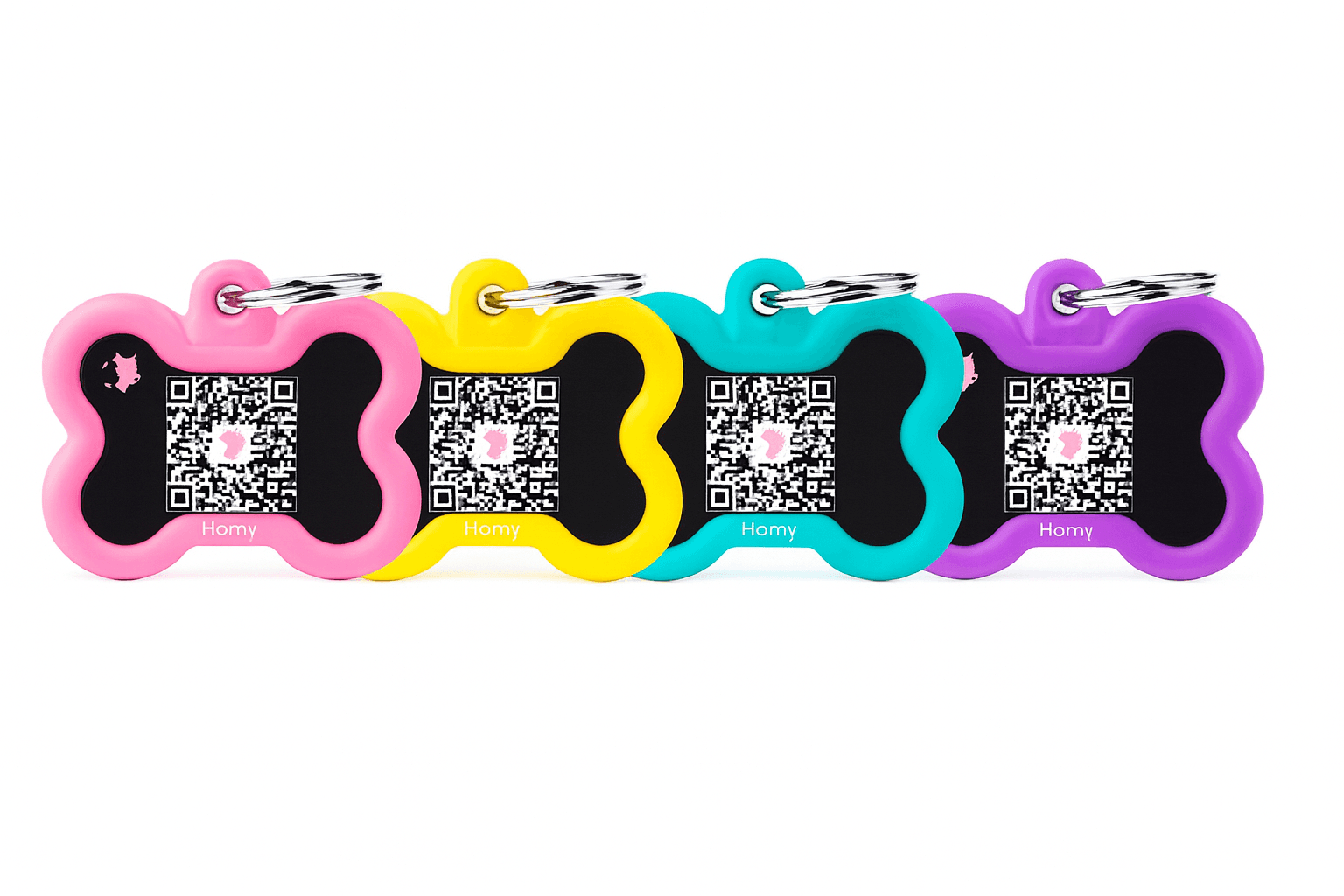
We make a QR pet tag because we believe the boring, universally-readable solution gets pets home fastest. What we focused on:
- Waterproof, weatherproof, scratch-resistant. Sand, sea, dog zoomies — tested.
- No app for the finder. Camera, tap, your phone rings.
- No subscription. Pay once, the QR works forever.
- Live profile. Change your number, add a photo, leave a custom message — your tag updates instantly.
- Instant alert to you. The moment someone scans, you get a notification with their approximate location.
You can see how it works here or jump to pricing.
Quick decision matrix
| Need | Best fit |
|---|---|
| Same-day return by a neighbor | QR tag |
| Shelter intake recovery | Microchip |
| Both (recommended) | QR + microchip |
| Just like new gadgets | NFC tag |
The honest truth: a $20 QR tag does more to bring your pet home, day-to-day, than any other piece of pet tech you can buy. Combine it with the chip you should already have, and you've covered both ends — the stranger on the street and the shelter across town.
A tag that brings them home.
Waterproof QR tag. No app, no subscription. Your phone rings the moment someone scans.
See plans