Food allergies in dogs: symptoms, diagnosis and diet
Itching, ear infections, digestive problems: how to recognise a food allergy in your dog, how the vet confirms it with an elimination diet, and how to adapt their food.
Is your dog scratching non-stop, licking their paws or getting one ear infection after another? A food allergy is one of the possible causes. It's less common than people think, but when it is the culprit, the right diet makes all the difference.
This article is for information only and does not replace your vet's advice.
Allergy or intolerance?
- A food allergy is an immune system reaction to an ingredient in the food, most often a protein (beef, chicken, dairy products, wheat, egg, soya…).
- A food intolerance doesn't involve the immune system: it's poor digestion of a food (for example milk in many adult dogs).
The signs can look alike, and only the vet can tell the difference.
Symptoms that should raise a flag
On the skin
- itching, especially on the paws, ears, belly, armpits and around the eyes and anus;
- licking or nibbling the paws;
- redness, hair loss, spots;
- recurring ear infections.
In the digestive system
- vomiting;
- diarrhoea or frequent soft stools;
- wind, bloating.
Itching that lasts all year round, with no seasonal peak, can point to a food-related cause.
Other causes to rule out first
A lot of itching has another origin, notably fleas (very common in Tunisia, especially in summer), mange, environmental allergies (pollen, dust mites) or skin infections. That's why the vet starts by ruling these causes out.
The diagnosis: the elimination diet
There is no reliable blood test for food allergies in dogs. Diagnosis relies on an elimination diet, set up with your vet:
- Usually for 6 to 8 weeks, your dog eats only a prescribed food: either a protein they have never eaten before, or a hydrolysed food (proteins "broken down" so they are no longer recognised).
- Nothing else: no treats, no table scraps, no flavoured medication without the vet's approval. The whole family has to play along.
- If the symptoms improve, the vet may suggest reintroducing the old food to confirm the diagnosis.
It's demanding, but it's the only way to truly identify the culprit.
Living with a food allergy
- Read the labels: the problem protein can hide in treats, chews and some medications.
- No table scraps: a bite of couscous, meat in sauce or bread can be enough to set the itching off again.
- Tell everyone: family, neighbours, pet sitter.
- Plan their food when travelling: some specific brands aren't available everywhere in Tunisia. Keep a stock in reserve.
Useful information on their profile
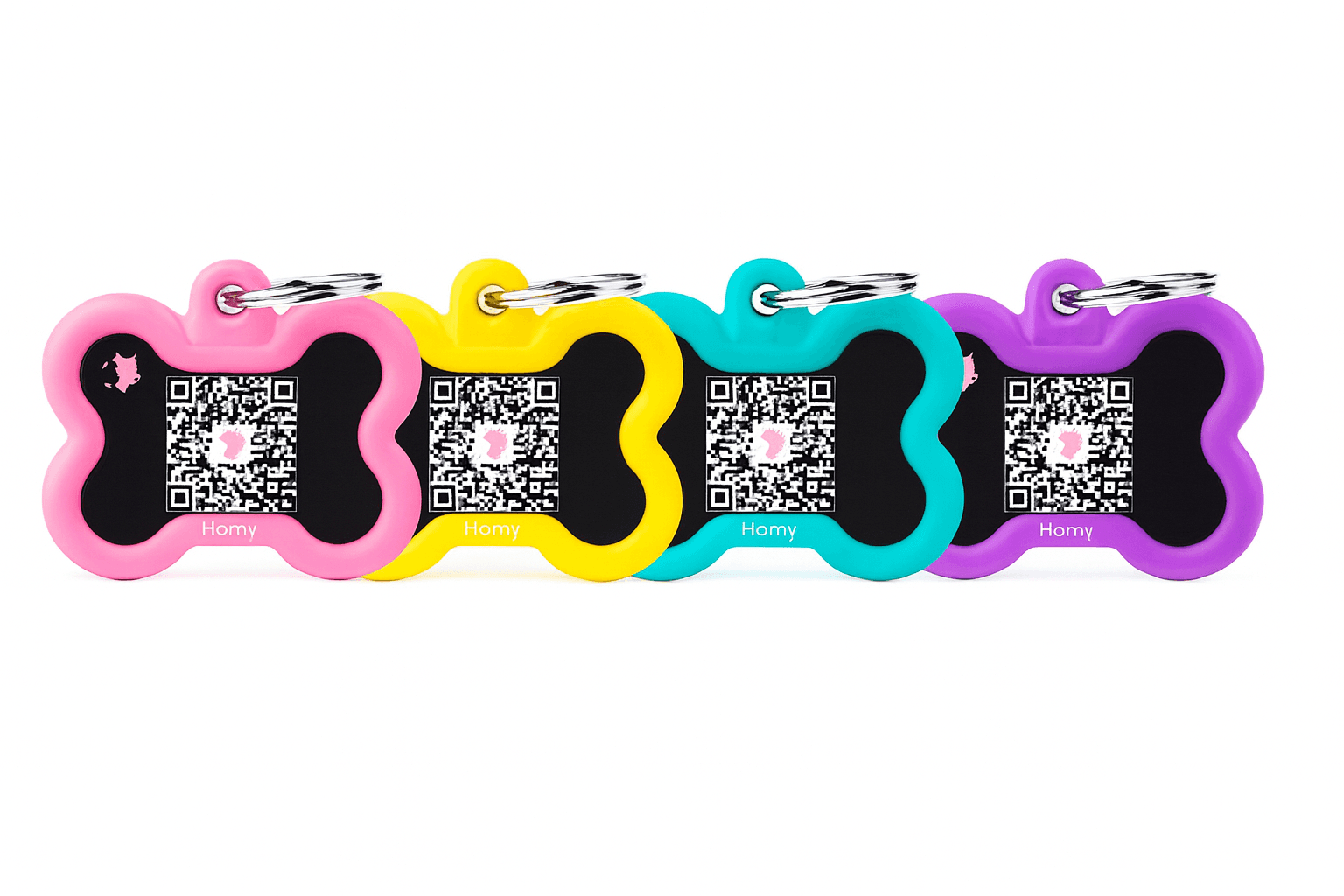
If your dog has a food allergy, note it in the description on their Homy QR tag profile (for example "allergic to chicken, do not feed"). If someone finds them, they'll know not to give them just anything.
Key takeaway: persistent itching and digestive problems can be a sign of a food allergy. Diagnosis is made with your vet, through a strict elimination diet. For the foods that are dangerous to all dogs, read foods toxic to dogs.
A tag that brings them home.
Waterproof QR tag. No app, no subscription. Whoever finds your pet scans it and alerts you in one tap.
See plans